Organic Mattresses · Materials Guide
What to Check in an Organic Latex Mattress: Core, Cover, and Certifications
An organic label is a starting point, not a full description. To understand what an organic latex mattress is made of—and whether its construction suits your needs—look closely at the latex core, the layers above it, the cover, and the certifications attached to specific materials.
Published November 22, 2026
A mattress is a layered landscape. Beneath the sheet, natural and manufactured materials are arranged to support weight, cushion pressure, regulate warmth, and protect the structure from everyday wear. On an organic latex mattress, the word “organic” may describe some of those materials, but it does not by itself explain how the bed is built, how it will feel, or which parts have been independently certified.
That distinction matters when comparing organic latex mattresses. Two products can use latex from rubber trees and still differ substantially in processing, firmness, layer design, cover fabric, quilting, and care requirements. One may have a single latex core; another may stack several layers, add wool or cotton, or use zones intended to vary support across the surface. A label alone cannot tell you whether the mattress will feel buoyant or yielding, whether its cover can be washed, or what a certification actually applies to.
A careful comparison begins with a simple question: What is in each part of the mattress? Look for clear descriptions of the latex type, the thickness and firmness of each layer, the materials in the cover, and the scope of any certification. These details turn a broad claim into useful information.
Start with the latex core
The core is the mattress’s principal supportive structure. In latex mattresses, it is usually made from one or more blocks or layers of latex foam. Latex is resilient: when compressed, it tends to spring back rather than slowly settling in the way some other foams do. But “latex” is a material family, not a precise description of a mattress’s feel. Density, firmness, thickness, processing method, and the layers surrounding the core all affect the experience.
Check whether the manufacturer names the latex type. Dunlop and Talalay refer to different manufacturing processes used to produce latex foam. The resulting materials can have different characteristics, but a process name is not a simple comfort rating. Neither word alone tells you whether a mattress will feel soft, medium, or firm; the product’s layer arrangement and specifications matter too. If a listing says only “natural latex” or “organic latex,” look for further detail rather than assuming that the label communicates every construction choice.
Next, find out whether the mattress has a single core or several separate layers. A one-piece latex core can have a straightforward construction, while a layered design may combine different firmnesses. A firm base can provide the main support, with a softer upper layer intended to cushion the body. Some mattresses also use zoned layers, in which sections are designed with different levels of firmness. Ask how the zones are oriented and whether the layer can be rotated or repositioned; the terms “zoned” and “customizable” are not interchangeable, and the arrangement should be explained clearly.
Thickness is another important specification. A product may describe the height of the mattress including a topper, or provide a core height separately from the finished profile. Compare like with like: identify the total height, the thickness of each latex component, and whether a topper is included or sold separately. Height can influence the feel and may also affect fitted-sheet depth, bed-frame compatibility, and how high the mattress sits above the floor.
Read the layer arrangement as a whole
Mattress materials work together. A latex layer does not act in isolation; the cover, quilting, wool, cotton, or other comfort materials between the sleeper and the core shape the surface feel. A mattress with a firm support layer and a soft latex top may feel quite different from one that uses a single medium-firm core, even if both advertise organic latex.
When reading specifications, trace the construction from top to bottom. Note the material and thickness of each layer, its stated firmness, and its role. Does the listing identify a comfort layer, a support core, and any natural-fiber quilting? Does it explain which side faces up? Are layers enclosed individually or held together within a cover? Clear answers make it easier to compare mattresses without relying on vague phrases such as “luxury comfort” or “balanced support.”
Firmness labels can offer a rough point of reference, but they are not universal measurements. One manufacturer’s medium may feel different from another’s. Body shape, sleeping position, personal preference, and the bed base can all affect how a mattress feels. Treat a firmness rating as one specification among several, and check the return terms or comfort trial details where relevant. A product description should not promise that a particular construction will solve pain or guarantee a medical outcome.
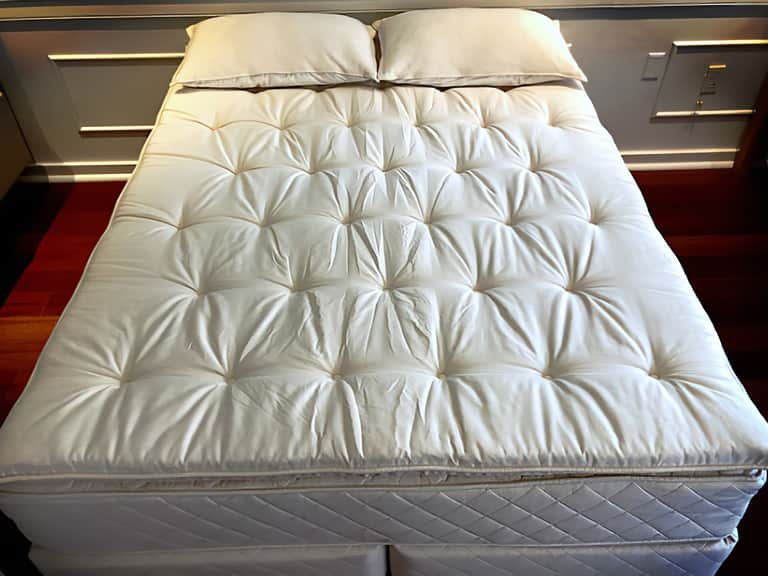
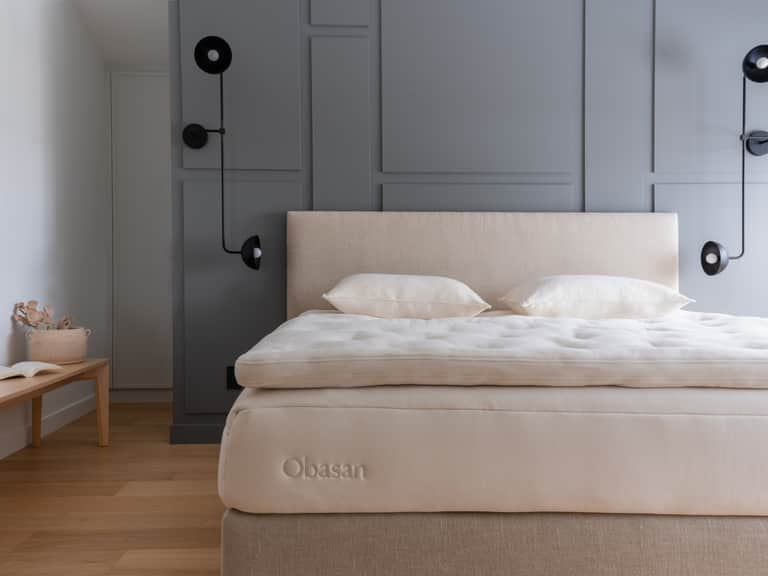
For an example of the detail a specification can provide, the Obasan Deluxe Dunlop Latex Mattress describes separate latex layers, a customizable zoned center, a quilted cotton-and-wool cover, and an additional latex-and-wool topper. Those details illustrate why it is helpful to distinguish the core mattress from an added comfort layer and to check exactly what contributes to the stated total height.
Examine the cover and quilting
The cover is more than a finishing fabric. It is the surface that meets the bedding, surrounds the mattress layers, and may include quilting or a protective barrier. Product information should identify the cover’s fibers and explain whether other materials are stitched or quilted into it. A cotton cover, for instance, is not the same as a cover quilted with wool; both the fabric and the filling contribute to the finished construction.
Look for specifics: Is the cover made from organic cotton, conventional cotton, or a blend? Is wool included? Is the cover removable, and if so, can it be washed? “Removable” does not mean “machine washable.” Many mattress covers are intended only for spot cleaning, while water or aggressive cleaning can damage the fabric, quilting, or internal materials. Follow the care instructions for the actual product rather than assuming that a natural-fiber cover can be laundered like a pillowcase.
Wool is sometimes used in mattress quilting because it can help manage moisture and contributes a distinct cushioning feel. Cotton may be used as a cover fabric or as a layer in the quilting. The exact combination varies, so identify the role and amount of each material wherever the information is available. If you are sensitive to a particular fiber, have allergies, or simply prefer a certain surface feel, a complete materials list is more useful than a broad “natural materials” claim.
Also check the practical design details: the mattress’s total depth, whether the cover zips open, whether the top can be rotated, and what the warranty says about care or stains. A cover that cannot be machine washed may still be easy to maintain with a suitable mattress protector. A fitted protector can help limit exposure to spills, perspiration, and everyday soil, while preserving the mattress surface. Confirm that the protector fits the mattress depth and does not interfere with the feel you want.
Understand what certifications do—and do not—say
Certifications can help verify claims, but they are useful only when you know what has been certified. A mark may apply to latex, textiles, a finished product, or a facility. It may address organic content, restricted substances, processing requirements, or other defined criteria. Those are different questions, and one certification should not be treated as proof of every possible environmental, health, or performance claim.
For latex, a certification such as GOLS—short for the Global Organic Latex Standard—is associated with organic latex and requirements across relevant stages of processing and supply. For textile components, GOTS—the Global Organic Textile Standard—covers organic fibers and a set of environmental and social criteria for textile processing. These standards apply to their defined scopes; a GOTS certification for a cotton cover, for example, does not automatically certify the latex core.
Read the wording carefully. Does the listing name the certification and say which component it covers? Is the claim about the latex itself, the cover fabric, the wool, or the complete mattress? If the seller provides a certificate number or other verification information, check whether it matches the product and the materials described. A logo without an explanation may leave important questions unanswered.
Terms such as “natural,” “eco-friendly,” “chemical-free,” and “non-toxic” do not all mean the same thing as “certified organic.” Some are broad marketing descriptions rather than standardized certifications. Even a well-defined certification has boundaries: it does not necessarily measure comfort, lifespan, suitability for a particular sleeper, or the performance of every part of a finished mattress. Use certification as evidence about a specific set of criteria, then evaluate construction and care separately.
If certification is a priority, make a short materials checklist before comparing products. Record the latex certification, textile certification, certified fiber content, and any parts for which documentation is not provided. This makes it easier to see whether two mattresses use similar language while documenting different components.
Match construction to your sleep preferences
Specifications describe a mattress, but the right choice depends on how it feels to you. Consider your preferred sleeping position, whether you like a surface that yields or pushes back, and whether you share the bed with someone whose preferences differ. A softer top layer can feel more cushioning; a firmer support layer may feel more stable. Neither arrangement is universally best, and the words “supportive” and “comfortable” need to be interpreted alongside the actual layers and firmness information.
For side sleeping, some people prefer more surface cushioning around the shoulders and hips. Back sleepers may look for a balance between cushioning and a stable feel. Stomach sleepers often seek a less yielding surface, though comfort is individual. These are practical considerations, not medical rules: body proportions, mattress dimensions, pillow height, and personal preference all influence how a sleep setup feels.
Couples should check whether the mattress offers different firmness choices on each side, and whether that feature is available in the size they need. A customizable or split construction can be helpful when preferences diverge, but it may involve extra components, setup steps, or maintenance. Confirm what can be changed, what is fixed, and whether adjustments are covered by the product’s terms.
Consider temperature and moisture as part of the full bedding system. Latex, cotton, and wool can each have different airflow and moisture-handling characteristics, but the complete effect depends on the cover, the quilting, the sheets, the protector, room conditions, and personal comfort. Avoid assuming that a particular material guarantees a cool night. Instead, ask how the layers are built and select breathable sheets and protectors that suit the mattress.
Check the base, size, and maintenance requirements
A mattress depends on the surface beneath it. Before purchasing, confirm that the mattress is compatible with your foundation, platform, slats, or adjustable base. Manufacturers may specify allowable slat spacing, center support, or other requirements. Those details are especially important for heavier, layered latex constructions. A base that does not meet the stated requirements can affect stability and may have warranty implications.
Measure the bed frame and compare it with the mattress dimensions, not just the size name. Twin, queen, king, and other labels are useful conventions, but exact measurements can vary slightly by product and region. Check the room access route as well: a mattress that fits the frame may still be difficult to move through doorways, stairs, or narrow hallways.
Care instructions deserve attention before the mattress arrives. Latex cores are not generally treated like washable household textiles, and many mattress covers are spot-clean only. Ask whether the mattress should be rotated, whether layers can be flipped, and how often any recommended maintenance should occur. Use a protector if appropriate, keep liquids away from the mattress, and let any cleaned area dry fully before replacing bedding. Do not apply heat or cleaning products unless the manufacturer says they are suitable.
Finally, read the warranty and trial terms. A long warranty does not necessarily cover ordinary changes in comfort, stains, misuse, or an unsuitable foundation. Note what counts as a defect, what maintenance is required, and whether the warranty is limited. If a comfort trial is offered, check the trial period, return conditions, fees, and whether the mattress must be kept in good condition.
A practical comparison checklist
When product descriptions become dense, a short checklist can bring the important details into focus. For each mattress you are considering, write down:
- Latex type: Is it identified as Dunlop, Talalay, or another type, and is the description specific about the material?
- Certification scope: Which component is certified, and what standard is named?
- Layer map: How many layers are there, what are their thicknesses, and what material makes up each one?
- Firmness details: Are firmness levels listed for individual layers as well as for the finished mattress?
- Cover and quilting: What fibers and fillings are included, and is the cover removable or washable?
- Finished dimensions: What is the total height, including any topper, and will it fit your frame and sheets?
- Customization: Can firmness or zoning be adjusted, and is that option available in your chosen size?
- Base requirements: What kind of foundation is recommended, and are there rules for slats or center support?
- Care and warranty: How should the mattress be cleaned and maintained, and what do the warranty and trial actually cover?
This method helps separate measurable specifications from general claims. It also gives you a useful set of questions to ask if a product listing leaves gaps. A transparent description should make it possible to understand what is inside the mattress without requiring guesswork.
Questions worth asking
If important details are missing, ask the seller or manufacturer directly. Request a component-by-component materials list, clarification of what a certification applies to, and a breakdown of the mattress height. If a listing uses phrases such as “organic latex construction” but does not identify the cover or any non-latex layers, ask which materials are included and whether they carry their own certifications.
It is also reasonable to ask how the mattress should be supported, whether the cover can be cleaned, and whether an included topper is part of the stated warranty. For layered or zoned designs, find out whether components can be repositioned and whether doing so changes the intended feel. Clear answers help you compare products on the basis of construction rather than relying on a single label.
The label is the beginning, not the conclusion
Choosing an organic latex mattress is an exercise in reading its construction. Start with the core, identify the latex type and each layer, and then look outward to the quilting and cover. Check which materials are certified, what each certification covers, and what the manufacturer says about compatibility and care. Finally, match those details to your sleep preferences, bed setup, and practical requirements.
Organic materials may be an important priority, but a thoughtful decision depends on more than the word “organic.” The most useful product information is specific, verifiable, and easy to compare. When the layers, cover, certifications, and care instructions are clearly described, the mattress becomes less of a sealed mystery and more of a well-documented piece of everyday design.